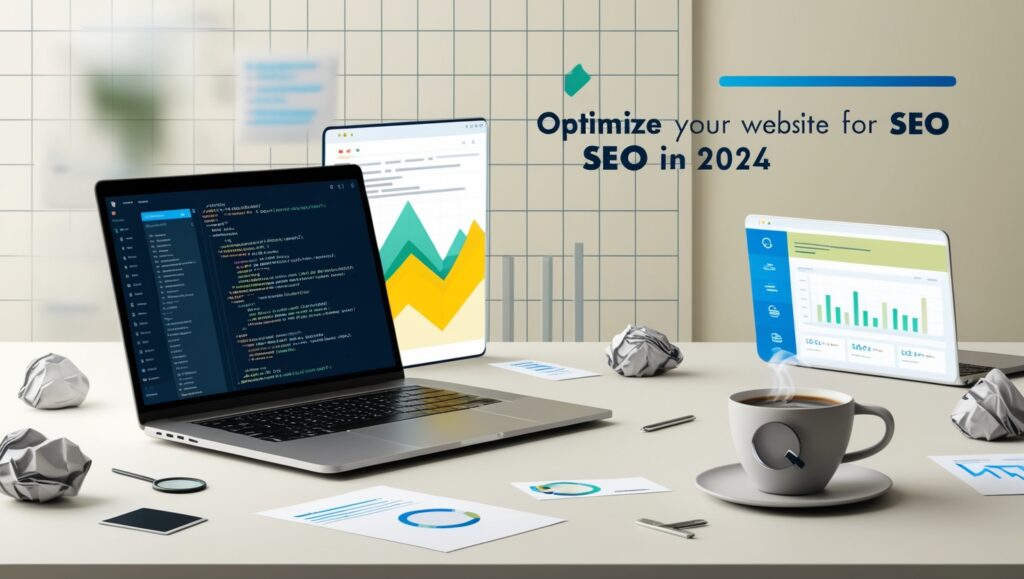
In 2024, Optimize Your Website for SEO by focusing on quality content that aligns with user intent. Structure pages with relevant keywords, clear URLs, and targeted search terms. Use SEO tools to find lower-volume keywords and regularly update content to maintain engagement. Understand how search engines crawl your site, and prioritize valuable content that meets user needs. Good SEO goes beyond keywords—each page should enhance your site’s SEO, drawing consistent traffic and improving visibility.
Why is SEO and Why is it Important?
Optimize Your Website for SEO to boost visibility in search results. This involves creating appealing, easily crawled content and implementing off-page SEO tactics. By prioritizing SEO, you improve search visibility and attract organic traffic, ensuring users and search engines can find your valuable content effectively.
Understanding Search Engine Optimization
- Understand SEO: Essential for creating a website that attracts visitors by improving visibility in search results.
- Optimize Content: Make your website relevant to search queries to boost search engine ranking.
- Use SEO Techniques: Boost SEO performance to help search engine crawlers find and index your site.
- Focus on Continuous Improvement: SEO requires ongoing attention to stay relevant and effective.
- Leverage Search Engine Marketing: Use strategic SEO to enhance visibility and drive website traffic.
- Start Now: Begin optimizing your website today to enjoy the long-term benefits of improved SEO.
How To Optimize Your Website for SEO
- Conduct Keyword Research: Identify relevant keywords that align with user intent.
- Optimize Page Titles and Meta Descriptions: Use keywords naturally in titles and descriptions for better visibility.
- Improve Site Structure: Create a clear URL structure and organized navigation for easy crawling.
- Enhance Content Quality: Publish valuable, engaging content that addresses users’ needs and aligns with search intent.
- Optimize Images: Use alt text and compress images to improve load speed and accessibility.
- Focus on Mobile-Friendliness: Ensure your site is responsive and performs well on mobile devices.
- Increase Page Speed: Use caching, optimize images, and minimize code to boost load times.
- Build Quality Backlinks: Gain links from reputable sites to increase authority and visibility.
- Utilize Analytics: Track SEO metrics to refine your strategies and improve performance over time.
- Regularly Update Content: Keep your site fresh with new, relevant content to engage users and boost rankings.
On-Page SEO Best Practices
- Use Relevant Keywords: Incorporate keywords naturally in titles, headers, and throughout the content to help search engines understand page context.
- Optimize Meta Tags: Ensure accurate and relevant meta tags for better visibility and indexing.
- Add Alt Text to Images: Use descriptive alt text for images to improve accessibility and search engine understanding.
- Create Clear URL Structure: Ensure URLs are simple, clean, and relevant to the content for better user experience and SEO.
- Update Content Regularly: Keep content fresh and up to date to maintain engagement and improve rankings.
- Ensure Mobile-Friendliness: Optimize your site for mobile devices, as search engines prioritize mobile-friendly websites.
Technical SEO: What You Need to Know
Technical SEO improves visibility by optimizing site speed, mobile-friendliness, and crawlability. Key elements include XML sitemaps, schema markup, redirects, fixing broken links, and enhancing page load times to boost rankings and user experience.
Off-Page SEO Strategies to Consider
| Off-Page SEO Strategy | Description |
|---|---|
| Building Backlinks | Obtain high-quality backlinks from reputable websites to boost credibility. |
| Social Media Marketing | Use social platforms to drive traffic, increase engagement, and build brand awareness. |
| Online Forums & Communities | Participate in niche forums to showcase expertise and attract potential customers. |
How SEO Impacts Your Search Engine Rankings
SEO is important because it directly influences your website’s visibility on search engines. By optimizing your content with relevant keywords and quality backlinks, you enhance your chances of ranking higher in search results. This increased visibility leads to more organic traffic, which can translate into higher conversion rates. Ultimately, a strong SEO strategy not only improves your rankings but also builds credibility and trust with your audience.
What Are the Different Types of SEO?
On-page SEO focuses on optimizing individual web pages to improve their rankings. This includes keyword usage, content quality, and HTML tags.
Off-page SEO involves activities outside your website, such as link building and social media marketing, to enhance your site’s authority.
Technical SEO ensures that your website meets technical requirements, like site speed and mobile-friendliness, for better crawling and indexing by search engines.
What SEO Tools Can Help Improve Your Website?
SEO Tools are essential for enhancing your website’s visibility. Tools like Google Analytics provide insights into user behavior, helping you understand traffic patterns. Additionally, SEMrush offers keyword research and competitive analysis, allowing you to optimize content effectively. For on-page SEO, Yoast SEO can guide you in improving your site’s structure and readability, ensuring a better user experience and higher rankings.
Using Google Search Console for SEO Optimization
- Google Search Console provides insights into website performance in search results.
- Analyzes search queries to identify keywords driving traffic for content optimization.
- Alerts users to indexing issues and mobile usability concerns.
- Helps address problems quickly to maintain site functionality.
- Regularly monitoring performance improves overall search visibility.
What Are Effective SEO Strategies for 2024?
| Pros | Cons |
|---|---|
| Enhances User Experience: Focus on improving site usability and engagement. | Requires Continuous Updates: SEO strategies need constant adjustments as trends evolve. |
| Mobile-First Indexing: Mobile traffic boosts rankings and accessibility. | Can Be Resource-Intensive: Optimizing for mobile and voice search may need technical expertise. |
| High-Quality Content: Engaging, relevant content improves search rankings. | Time-Consuming: Creating high-quality content consistently can be time-intensive. |
| Voice Search Optimization: Optimizing for voice search reaches a growing user base. | Limited Data on Voice Search Impact: Difficulty in measuring exact results and effectiveness. |
| AI-Driven Analytics: AI tools provide advanced insights for targeted strategies. | Dependence on Technology: AI tools can be expensive and may require learning to use effectively. |
Ways to Improve Your Website’s SEO Performance
Optimize your website by using relevant keywords, improving loading speed, and ensuring mobile-friendliness. Build quality backlinks and update content regularly to enhance authority, visibility, and user experience.
How to Measure Your SEO Success?
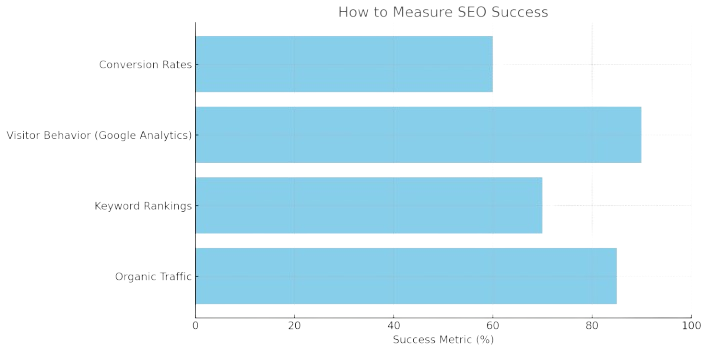
Here’s a bar graph representing the key metrics for measuring SEO success. The metrics include organic traffic, keyword rankings, visitor behavior analysis (via Google Analytics), and conversion rates. You can track these values to evaluate and improve your SEO strategy effectively.
Evaluating the Impact of SEO Efforts on Traffic
Evaluating the impact of SEO efforts on traffic is crucial for understanding the effectiveness of digital marketing strategies. By analyzing metrics such as organic search rankings, click-through rates, and user engagement, businesses can identify areas for improvement. Regularly monitoring these factors helps in fine-tuning SEO tactics to enhance visibility and drive more traffic to the website, ultimately leading to increased conversions.
In Conclusion
In conclusion, to Optimize Your Website for SEO in 2024, it’s essential to focus on creating high-quality content, optimizing site structure, and enhancing user experience. By conducting keyword research, improving page load speeds, and building quality backlinks, you can significantly improve your website’s visibility and traffic. Remember, SEO is an ongoing process that requires regular updates and adjustments to stay competitive and achieve long-term success. Prioritize these strategies to boost your website’s performance and meet both user and search engine expectations.