
Mastering the Data Labeling process is essential for Machine Learning success. Accurate data annotation creates high-quality training datasets, improving model performance. Best practices, like using active learning, reduce labeling efforts while maintaining data privacy. In-house teams or labeling services ensure consistency and quality. Proper data enhances model generalization and drives success in real-world applications, making Mastering the Data Labeling process a key factor in machine learning.
What is the Mastering the Data Labeling Process?
The Data Labeling process involves accurately annotating datasets to train machine learning models. It includes categorizing data into defined labels to help models recognize patterns. By following best practices such as using active learning and ensuring consistency, organizations can improve the quality of their training data. This process enhances model performance, enabling better generalization to real-world data and driving success in machine-learning applications. Proper data labeling is essential for building robust and efficient AI systems.
Understanding the Labeling Process in Machine Learning
Data Labeling is the process of assigning labels to raw data within the data you want to use for model training. A model is used to label this data for model training, ensuring that it is accurately annotated data to improve performance.
However, poorly labeled data can lead to significant issues, making it crucial to utilize data labeling services that employ common data labeling techniques. With a lot of data involved, it’s essential to address data security risks while ensuring high-quality data for training.
Key Steps in the Data Labeling Process
- Data Collection & Organization
- Define Labeling Guidelines
- Label Data with Trained Annotators
- Review & Validate Labeled Data
What are the Different Types of Data Used in Machine Learning?
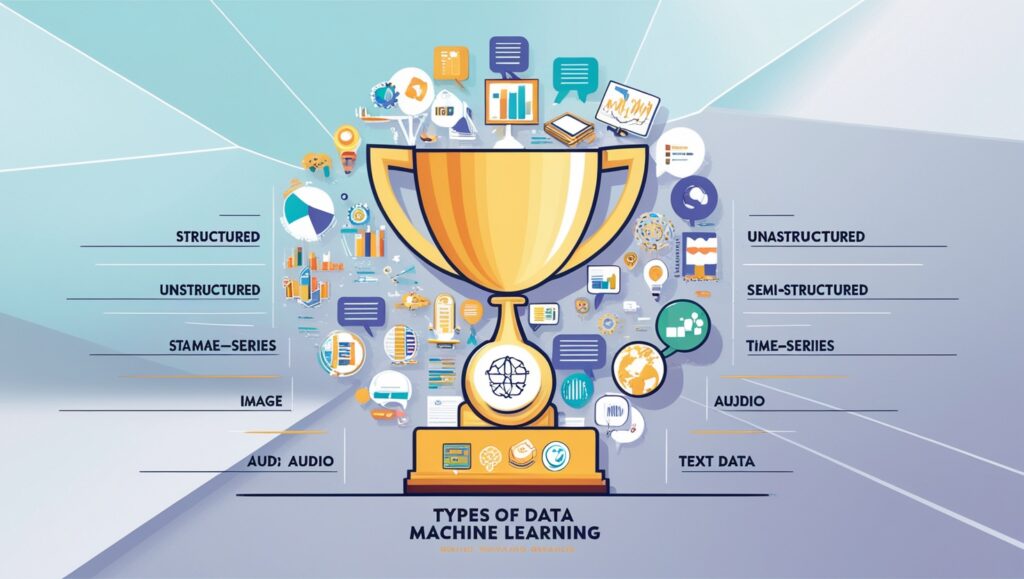
- Structured Data (organized in databases)
- Unstructured Data (e.g., images, text)
- Semi-structured data (mix of both)
- Time-Series Data (temporal patterns for forecasting)
Exploring Different Types of Data in Machine Learning
| Data Type | Description | Challenges | Opportunities |
|---|---|---|---|
| Structured Data | Organized in databases, often in rows and columns (e.g., spreadsheets) | Requires clear schema, limited flexibility in format | Easy to analyze, can use traditional algorithms (e.g., regression, classification) |
| Unstructured Data | Raw, unorganized data like text, images, videos | Rich in information, enables deep-learning techniques | Flexible, and useful for diverse data sources |
| Semi-Structured Data | Combines structured and unstructured elements (e.g., JSON, XML) | Parsing challenges, variability in structure | Flexible, useful for diverse data sources |
| Time-Series Data | Data points indexed in time order (e.g., stock prices) | Temporal dependencies require specialized models | Essential for forecasting and trend analysis |
Types of Data Labeling Techniques
- Manual Labeling: Human annotators categorize data, ensuring accuracy and consistency.
- Automated Labeling: Algorithms automatically label data for faster processing and efficiency.
- Semi-Supervised Learning: Combines small amounts of labeled data with larger unlabeled data sets to improve model performance.
What is the Role of Data Labelers in the Labeling Process?
Data labelers are vital in annotating datasets, ensuring machine learning algorithms receive accurate information. Their expertise in identifying patterns and categorizing data improves AI model performance, leading to better predictions and decision-making. Their attention to detail is essential for training reliable and effective systems.
The Importance of Accurate Data Labeling
- Accurate data labeling is crucial for the success of machine learning models.
- Ensures algorithms learn from high-quality examples, improving performance and reliability.
- Inaccurate labels can introduce bias and errors, negatively affecting decision-making.
- Investing in precise labeling enhances data-driven systems’ efficiency.
- Promotes trust in AI technologies by ensuring the reliability of results.
In-House vs. Outsourced Data Labeling Solutions

In-house data labeling solutions offer greater control and customization, allowing organizations to tailor processes to specific needs. However, they can be resource-intensive and costly.
On the other hand, outsourced data labeling solutions provide scalability and access to specialized expertise, often reducing time and expense. Yet, they may lack the same level of oversight and quality assurance.
How to Label Data for Learning?
Using automated Labeling tools significantly enhances efficiency in data processing. These tools streamline the labeling process, reducing the time and effort required for manual annotation. By leveraging advanced algorithms, they ensure consistent and accurate labeling, enabling teams to focus on more complex tasks. Ultimately, this leads to faster project completion and improved productivity.
Steps to Label Your Data Accurately
- Define clear guidelines for labeling criteria to ensure consistency.
- Ensure all team members understand the guidelines.
- Implement quality control measures like double-checking labels or feedback loops.
- Regularly review and update the labeling process to adapt to changes in data or objectives.
In Conclusion
Mastering the Data Labeling process is crucial for the success of machine learning projects. By ensuring accurate, consistent labeling, businesses can create high-quality datasets that enhance model performance and generalization. Whether using manual, automated, or semi-supervised techniques, attention to detail and following best practices are key. The right data labeling approach, whether in-house or outsourced, can significantly impact the efficiency and effectiveness of AI systems. Ultimately, mastering data labeling is essential for building reliable, high-performing machine learning models that drive real-world success.